

Best Outdoor Decking: Natural Wood vs. Capped Composite vs. Traditional Composite

Outdoor decking, whether for homes, condominiums, or hospitality spaces, is both a functional and aesthetic upgrade that expands usable living areas while enhancing visual appeal. However, the choice of material matters, as the decking should withstand weather, feel pleasant underfoot, and complement the space’s design.
Among the most popular choices available—natural wood, capped composite decking and traditional composite—the capped composite decking often stands out as the best choice. It combines durability, low maintenance, aesthetic appeal, and a mid-range price point that balances cost with long-term value. But let’s have a closer look at how these materials compare so you can choose the right one for your outdoor space.
Three Main Types of Decking Materials
1. Natural Wood Decking
- Wood decking is the classic choice and has been around for decades, long before traditional composite or capped composite materials were introduced. Typically made from pressure-treated lumber or hardwoods, it continues to be a popular option for those seeking a traditional look.Pros:
- Natural aesthetic with a timeless charm
- Can be stained in various colours
Cons:
- Requires yearly maintenance, such as painting or staining
- Prone to rot, mould, insect damage, and splintering
- Shorter lifespan compared to composite or vinyl decking
Natural Wood decks may be best suited for homeowners who prioritise low initial cost and are willing to commit to annual upkeep. However, over time, maintenance expenses can make this material costlier than other options.
2. Capped Composite Decking
Capped Composite decking, also known as Capped Wood Plastic Composite (cWPC) decking, is made from a blend of recycled wood fibres and plastics, often capped with a protective layer. Designed to resemble natural wood, this material combines the beauty of timber with the durability of synthetic materials. Thanks to modern technology, composite timber decking has become the ideal addition to any outdoor living space, addressing many of the challenges associated with traditional wood.
Pros:
- Resembles the look of real wood with added durability
- Resistant to rot, mould, termites, and weather damage
- No need for repainting, sealing, or staining
- Long lifespan with minimal upkeep
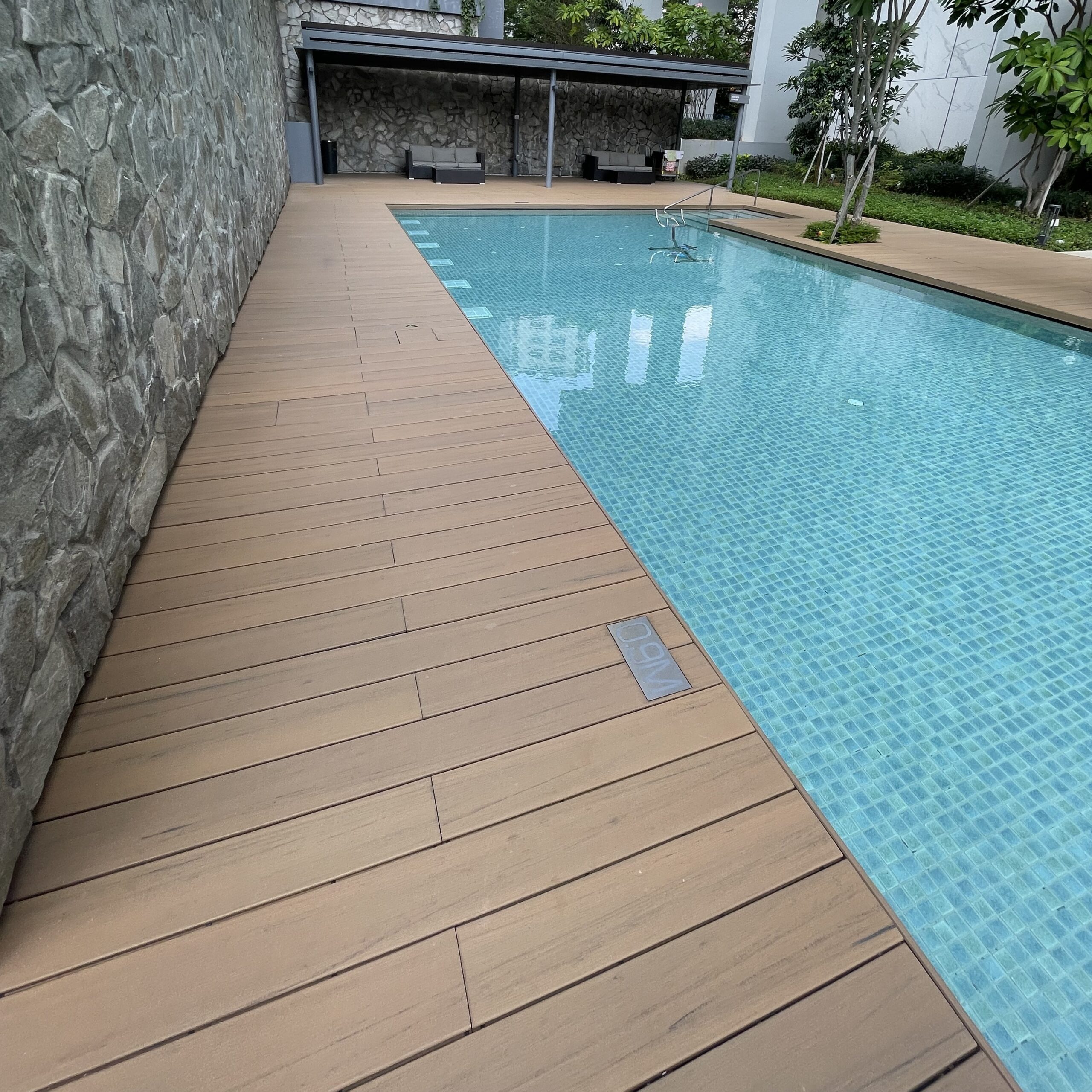
- Slip-resistant and moisture-resistant, ideal for poolside use
Cons:
- Deck boards can be scratched or chipped accidentally
cWPC decking is ideal for luxury residential, hotels, high-traffic outdoor areas, and commercial spaces that desire the warmth of wood without the high maintenance, providing long-term durability and premium aesthetics.
3. Traditional Composite Decking
Traditional Composite decking, also known as Wood Plastic Composite (WPC) decking, is sometimes a 100% synthetic material or a blend of wood fibres and plastics designed for maximum durability and minimal upkeep. With advanced manufacturing, WPC boards feature elegant wood-grain textures and a wide range of colours, giving outdoor spaces a distinct luxury appeal.
Pros:
- Upscale look with realistic wood-grain finishes
- Resistant to scratches, fading, and stains
Cons:
- Highest price point among decking materials
- Water-absorption is high, with some occurrence of mildew and mould
WPC decking is best suited for residences, hotels, and high-traffic outdoor areas where it is a cost-efficient and long-lasting solution.
Key Differences Between Natural Wood, Capped Composite, and Traditional Composite Decking
Since each type of decking material performs differently, the choice depends mainly on lifestyle needs and long-term expectations.
| Feature | Wood Decking | Traditional Composite Decking | Capped Composite Decking |
| Durability | Shorter lifespan; prone to rot, mould, and insects | Highly durable; resistant to rot | Long lifespan; water-resistant |
| Maintenance | Requires annual repainting/staining | Minimal upkeep; no staining or sealing needed | Minimal upkeep; no repainting, resistant to fading and scratches |
| Comfort | Can splinter over time | Smooth surface; splinter-free | Splinter-free |
| Cost | Lowest upfront cost | Mid-range pricing | Most expensive |
| Suitability for Singapore’s Climate | Needs regular care; vulnerable in hot, humid conditions | Performs well in humidity; moisture-resistant and long-lasting | Excels in tropical climates; a luxury choice with superior durability |
What is the Best Material for Exterior Decking?
So, what is the best exterior decking material? Choosing the right decking material depends on your budget, maintenance preferences, and long-term goals:
- Budget-conscious projects: Wood offers the lowest upfront cost but requires annual upkeep, making it less cost-effective over time.
- Balanced cost and performance: Traditional composite timber decking delivers the benefits of durability, comfort, and easy maintenance, making it a practical yet stylish choice for most Singapore properties.
- Premium investment: Capped composite timber provides superior longevity, water resistance, and minimal upkeep, but at a higher price point.
Transform Your Outdoor Space with Premium Decking Solutions by Tulou

If you are looking for an outdoor decking in Singapore that thrives in a humid climate with durability, style, and low maintenance, Tulou offers high-performance composite timber decking.
With a wide range of products, including Tuwood, Culture, and imported cWPC boards, we provide tailored decking solutions that suit any property. Moreover, our expert team handles professional installation, from balconies and patios to large outdoor spaces, ensuring a flawless finish.
Ready to enhance your outdoor space with decking? Get in touch with us today to discuss your needs.